← Back to Blog
Neighborhoods
What Is It Actually Like to Live in the Hampden Heights Neighborhood of Reading PA
By Adam Jacobini
Coldwell Banker Realty · DRE# RS345576
September 22, 2026 · 10 min read
If you are researching what it is like to live in the Hampden Heights neighborhood of Reading PA, you are asking the right question before committing to one of the most distinctive residential pockets in Berks County. Hampden Heights sits in the northeastern corner of Reading, bordered roughly by Albright College to the south and the city limits to the north and east, and it has a character that sets it apart from Reading's other established neighborhoods. This guide covers housing stock, price ranges, commute times, green space, local anchors, and what the day-to-day experience actually looks like so you can make an informed decision.
1. Where Hampden Heights Sits and How It Is Laid Out
Hampden Heights occupies the northeastern quadrant of Reading city proper, in Berks County, Pennsylvania. It is generally understood to run from roughly Hampden Boulevard on the west, north toward the city boundary near Antietam Creek, and east toward the Reading city limits that border Exeter Township. The neighborhood carries the zip code 19604, which it shares with portions of adjacent Reading and the Albright College campus that anchors its southern edge.
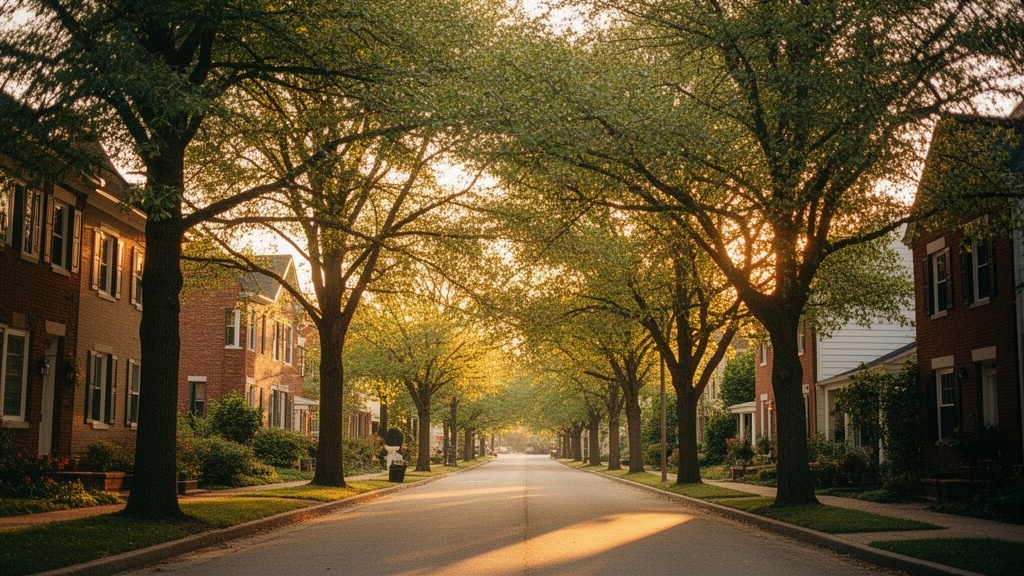
The area is not a planned subdivision. It grew organically through the early and mid-twentieth century, which means the streets follow a relatively consistent grid pattern that makes navigation straightforward. Blocks are walkable in scale, lots tend to be modest in size compared to suburban townships, and the tree canopy along many of the residential streets is mature enough to provide real shade in summer.
The Physical Boundaries
Understanding the edges of Hampden Heights matters because the neighborhood transitions quickly. To the south, Albright College's campus creates a clear institutional boundary along Centre Avenue. To the west, the character shifts as you move toward the denser commercial corridors of central Reading along North Fifth Street and North Ninth Street. To the east and north, the city boundary with Exeter Township and Muhlenberg Township marks where Reading's street grid gives way to the township road network.
This positioning gives Hampden Heights a relatively contained feel. Residents often describe it as feeling more like a distinct community within Reading rather than simply another city block, partly because the college campus and creek corridor create natural buffers. For a deeper look at the neighborhood's profile, the Hampden Heights community website provides local news, event listings, and information about the neighborhood association that has been active in the area for decades.
Street Grid and Architecture
Most of the residential streets in Hampden Heights were developed between roughly the 1920s and the 1960s, which shows clearly in the architecture. You will find a mix of brick colonials, Cape Cods, stone-front twins, and traditional two-story singles sitting on lots that typically range from about 4,000 to 8,000 square feet. Detached garages behind the main house are common, a hallmark of the era when these blocks were built. Porches, both front and rear, are standard features rather than upgrades.
The streetscape has a coherence that newer developments often lack. Because most homes were built within a few decades of each other and in a consistent regional style, the blocks have a visual rhythm. Brick and stone exteriors dominate, which also means lower exterior maintenance compared to wood-sided homes of similar age elsewhere in the region.
2. Housing Stock, Home Styles, and Price Ranges in Hampden Heights
Hampden Heights offers a range of home sizes and configurations at price points that remain accessible relative to many suburban Berks County markets. Whether you are looking at a twin home as a first purchase or a detached brick colonial with more square footage, this neighborhood has inventory across that spectrum. The key is understanding what you are getting at each price tier.
What Types of Homes You Will Find
The housing mix in Hampden Heights breaks down into a few clear categories. Twin homes, which share one wall with a neighboring unit, are the most common entry point and tend to offer two to three bedrooms and one to two bathrooms. Detached singles on interior lots provide more privacy and often include full basements, which add usable square footage even when the above-grade living space is modest. You will also find a smaller number of larger brick colonials on corner lots or on the wider streets closer to the Albright College edge of the neighborhood.
Condition varies considerably from block to block and from house to house. Some homes have been meticulously maintained or renovated with updated kitchens, new roofs, and modernized mechanical systems. Others are priced to reflect the need for work, which creates genuine opportunity for buyers willing to invest in improvements. A thorough inspection is essential in any home of this vintage.
What Prices Look Like Right Now
As of September 2026, homes in Hampden Heights have been trading in a range that reflects both the neighborhood's desirability within Reading and the broader Berks County market conditions. Twin homes in move-in condition have been selling in the $130,000 to $180,000 range. Detached singles in good condition typically fall between $170,000 and $260,000, depending on size, lot, and the extent of any updates. Larger colonials on the wider streets near the college can push past $280,000 when fully renovated.
These figures make Hampden Heights one of the more price-accessible neighborhoods within Reading city limits that still offers detached single-family homes. For broader context on what homes are selling for across Reading right now, the guide to homes for sale in Reading, PA in 2026 covers city-wide inventory and pricing trends in more detail.
3. Daily Life in Hampden Heights: Commutes, Errands, and Getting Around
Day-to-day life in Hampden Heights is shaped by the neighborhood's position within Reading and its connections to the broader Berks County road network. Most residents rely on a car for the majority of trips, though the density of the neighborhood and its proximity to commercial corridors means that some errands can be handled on foot or by bike.
Driving and Transit Options
From Hampden Heights, downtown Reading is roughly a 10 to 15 minute drive depending on traffic and your specific starting point within the neighborhood. Route 422, one of the primary east-west arteries through Berks County, is accessible within about 5 to 10 minutes of most Hampden Heights addresses via North Fifth Street or Hampden Boulevard. That connection puts the Wyomissing business district and the Reading Premium Outlets in Wyomissing roughly 15 to 20 minutes away by car.
For commuters heading to the Philadelphia suburbs or the city itself, the drive to King of Prussia is approximately 50 to 60 minutes under normal conditions via Route 422 East. Philadelphia's Center City adds another 30 to 40 minutes beyond that. BARTA, Berks Area Regional Transportation Authority, operates bus routes that serve the Reading area, and several routes pass through or near the northeastern part of the city, providing an option for commuters who prefer not to drive.
Walkability and Everyday Errands
Hampden Heights is more walkable than most suburban Reading-area communities, though it is not a neighborhood where you can handle all errands on foot. The commercial corridor along North Fifth Street, which runs along the western edge of the neighborhood, includes grocery options, pharmacies, and a range of small businesses. Residents closer to that corridor can walk to daily needs in under 10 minutes. Those deeper in the neighborhood will typically drive for grocery runs.
The Albright College campus edge of the neighborhood adds some walkable destinations as well. Coffee shops, casual dining, and small retail that serve the college community are within walking distance for residents on the southern blocks of Hampden Heights. Centre Avenue and its side streets have a modest concentration of locally owned businesses that have served both college and neighborhood residents for years.
4. Parks, Green Space, and Local Anchors Near Hampden Heights
Access to outdoor space is one of the practical realities that shapes what it is like to live in the Hampden Heights neighborhood of Reading PA. The neighborhood itself does not have a large central park, but it sits within reasonable distance of several meaningful green spaces and recreational areas.
Outdoor Space Within Reach
Antietam Creek runs along the northern edge of the Hampden Heights area, and the creek corridor provides informal green space and a natural buffer between the neighborhood and the adjacent township areas. For more developed park space, City Park is one of Reading's largest municipal parks and is located roughly 2 to 3 miles from Hampden Heights. City Park includes walking paths, athletic fields, a pool, and picnic areas across its expansive grounds along Perkiomen Avenue.
Nearer to the neighborhood, Pendora Park sits on the eastern side of Reading and is accessible within about a 5 to 10 minute drive. It includes athletic fields and open lawn space. For residents who want trail access, the Schuylkill River Trail system has entry points within the broader Reading area, and the trail extends in both directions for cycling and running.
Albright College and Its Influence on the Area
Albright College is a four-year liberal arts institution that sits directly adjacent to the southern boundary of Hampden Heights, and its presence shapes the neighborhood in tangible ways. The campus itself is a green, tree-lined space that adds visual openness to the area. The college hosts public events, performances, and athletic competitions throughout the academic year that residents can attend. Its presence also supports a small concentration of dining and retail along Centre Avenue that would not otherwise exist at that density.
The college also means that the area has a steady, year-round institutional anchor. Unlike purely residential neighborhoods, Hampden Heights benefits from the economic activity and physical maintenance standards that a functioning college campus brings to its immediate surroundings. For buyers who want to understand more about the neighborhood's demographic and housing profile, NeighborhoodScout's Hampden Heights profile provides detailed housing and population data that you can review independently.
5. The Hampden Heights Real Estate Market and What Buyers Should Know
The Hampden Heights market in September 2026 reflects the broader dynamics playing out across Reading city: limited inventory, steady demand from buyers priced out of surrounding townships, and a wide range of home conditions that require careful due diligence. Buyers who understand what to look for in a home of this era can find real value here; buyers who skip the inspection process or underestimate renovation costs can find themselves overextended.
How This Neighborhood Compares Within Reading
Within Reading city limits, Hampden Heights tends to carry slightly higher median sale prices than some of the more densely built neighborhoods closer to downtown, reflecting its housing stock of detached singles and its proximity to the Albright College campus. It is not the most expensive pocket of the city, but it consistently attracts buyers who are specifically looking for the combination of detached homes, a coherent streetscape, and city-level price points rather than township prices.
Homes in Hampden Heights have historically moved at a measured pace compared to some of the faster-turning suburban markets in Berks County. Days on market for well-priced, move-in-ready homes have been running in the 20 to 45 day range through the summer and early fall of 2026. Homes that need significant work or are priced above comparable sales tend to sit longer, which creates negotiating room for prepared buyers.
Tips for Buyers Considering Hampden Heights
Buying in a neighborhood of mid-century brick and stone homes requires attention to specific systems and details that differ from newer construction. Knob-and-tube wiring, galvanized plumbing, and oil-fired heating systems are all present in some Hampden Heights homes, particularly those that have not been updated since original construction. A qualified inspector who is experienced with older Reading-area housing stock is not optional; it is the most important step in the process.
Buyers should also understand Reading's property tax structure before making an offer. Reading city properties carry both city and Berks County millage rates, and homes within the city limits are subject to the Reading School District tax rate as well. The combined effective rate for Reading city properties is meaningfully higher than what buyers would pay in adjacent townships like Exeter or Muhlenberg, and that difference affects the true monthly cost of ownership. Factor it into your budget before you fall in love with a specific address.
Sellers in Hampden Heights benefit from the consistent demand for this type of housing. Brick and stone homes of this era have a durability and visual appeal that attracts buyers who have done their research. Pricing accurately based on recent comparable sales, presenting the home in clean and well-maintained condition, and being transparent about the age and condition of major systems will position a Hampden Heights listing well in the current market.
FAQ
What is the housing stock like in Hampden Heights compared to other Reading neighborhoods?
Hampden Heights is predominantly brick and stone construction from the 1920s through the 1960s, including twin homes, Cape Cods, and detached colonials. Compared to the denser row-home blocks closer to downtown Reading, Hampden Heights has more detached singles and larger lot sizes, which is part of why it attracts buyers looking for more separation between homes while staying within city limits. The trade-off is that these older homes require more due diligence around mechanical systems, wiring, and plumbing than newer construction in surrounding townships. Condition varies block by block, so a thorough inspection is essential. The architectural consistency of the neighborhood, with its mature street trees and brick facades, is a defining feature that distinguishes it from Reading's newer residential areas.
How do commute times from Hampden Heights to major employment centers compare?
From most Hampden Heights addresses, downtown Reading is a 10 to 15 minute drive, making it practical for residents who work in the city's healthcare, government, or commercial sectors. The Wyomissing business district, home to several large employers, is roughly 15 to 20 minutes via Route 422 West. For regional commuters, King of Prussia is approximately 50 to 60 minutes east on Route 422 under normal traffic conditions, and Philadelphia's Center City adds another 30 to 40 minutes beyond that. BARTA bus service provides a transit alternative for some routes, though most residents use personal vehicles for the majority of their commuting needs. The neighborhood's position in northeastern Reading gives relatively direct access to Route 422 without requiring a drive through downtown traffic.
What should buyers know about schools near Hampden Heights in Reading PA?
Homes in Hampden Heights fall within the Reading School District, which serves the city of Reading. As with any school district, prospective buyers are encouraged to research current information directly through the Pennsylvania Department of Education's website and the Reading School District's own resources, since school programs, boundaries, and performance data change over time and personal priorities around education vary widely. Albright College, a four-year liberal arts institution, sits directly adjacent to the southern boundary of the neighborhood and is a notable educational presence in the immediate area. Families researching schools should also look at the district's official enrollment and program information rather than relying on third-party rating sites, which may not reflect the most current or complete picture.